From Erasure to Identity
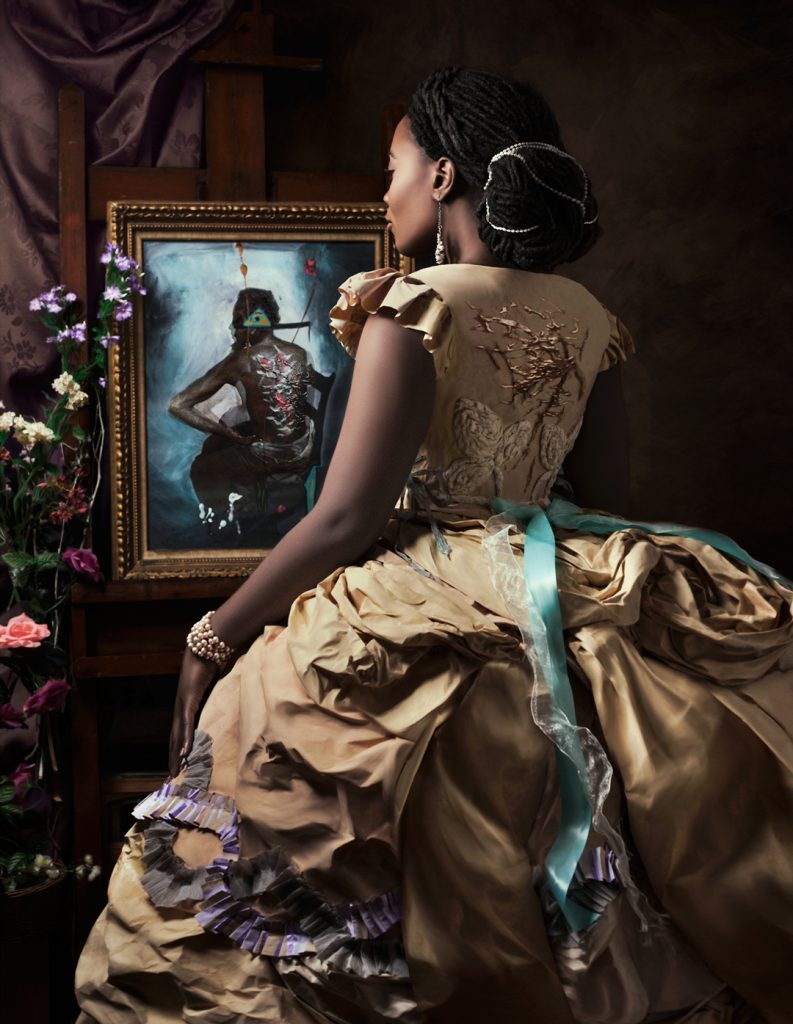
The history of Black women in art is marked by a long struggle for legitimate representation, as for centuries they were “depicted but rarely allowed to depict themselves”. This project investigates how dominant artistic practices actively diminished Black women’s humanity and existence through institutional mechanisms. For too long, Black female artists were sidelined—marginalized by racist, sexist, and colonial art histories. Even when Black figures were included in canonical works, such as the maid Laure in Manet’s Olympia, their presence and influence have gone “almost entirely overlooked” by mainstream art.
Historical Mechanisms of Visual Violence
Western art institutions frequently rendered Black women as objects, fetishized, exoticized, or ignored entirely. This visual violence was primarily deployed through specific, destructive, racist caricatures, specifically the hyper-sexualized “Jezebel,” the desexualized and servile “Mammy,” and the aggressive “Sapphire”. These harmful tropes functioned deliberately as social control mechanisms used to dehumanise Black women in the perception of white society.
This historical violence was compounded by textual and visual erasure. Powerful figures, such as the Ethiopian Princess Andromeda and the Queen of Sheba, were systematically whitewashed and distorted, largely because for many Western artists, “blackness and beauty… was dichotomous”. The earliest examples of Black women’s literature, appearing around 1859, articulate the sexual exploitation that all too often added to the oppression of slavery.
The Hypothesis and The Correction
The contemporary art world is currently experiencing a “seismic correction”. This research hypothesizes a clear and deliberate correlation between the extreme objectification of the past and the contemporary artistic shift toward nuanced, complex, and highly individualized self-portraits.
This modern movement rejects historical misrepresentation and uses every available medium to take back agency, craft new identities, and interrogate the gaze of the oppressor and the audience. Contemporary Black women are not only visible; they are at the center of conversations about identity, narrative, and power in visual art.
The work of artists like Amy Sherald, Mickalene Thomas, Betye Saar, Kara Walker and Simone Leigh is redefining the canon in real time, confirming the project’s visual thesis: the Black woman is finally released from the white male gaze altogether. This artistic revolution ensures that Black women have moved From Erasure to Authority.